
Olot
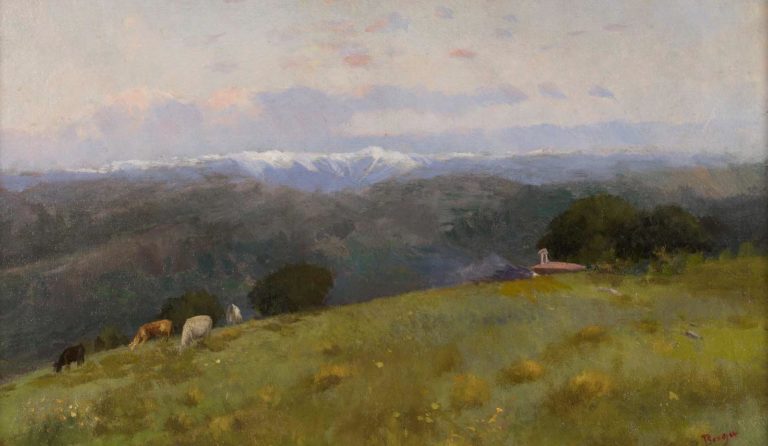
He taught for many years at the Artistic Centre and School of Fine Arts of Olot, and he formed a group of enthusiastic landscape artists, the beginnings of what at that time was the revolutionary Olot School of landscape painting. Although it was created by Vayreda, Berga was the one to consolidate and popularise the […]
Read morePrats de Santa Coloma, Andorra [Meadows in Santa Coloma]
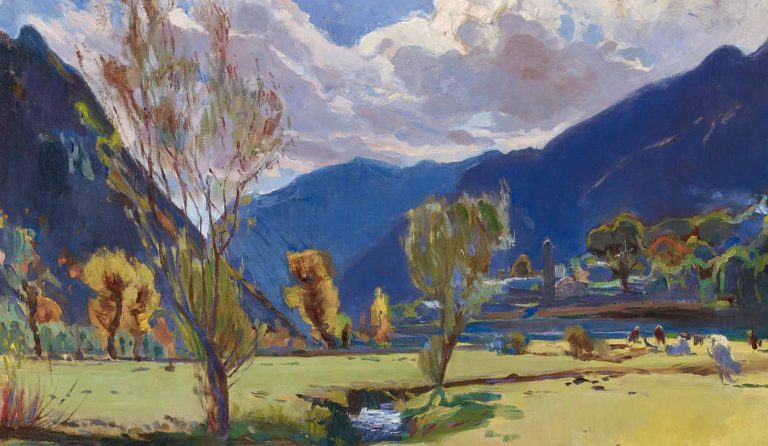
In 1932, he made the first of his three visits to Andorra. He arrived by car to Santa Coloma, accompanied by his wife, son, driver and assistant. This oil painting is a good representation of his post-impressionist style. There are three almost parallel areas –the field, the mountain and the sky–, bright and contrasting greens, […]
Read moreVilanova street and a bell tower
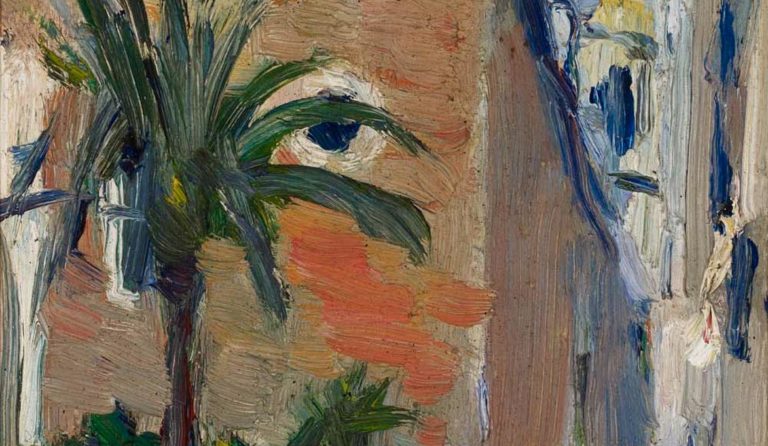
The small urban composition with anonymous figures and the reuse of the canvas -there is a rural architectural composition on the reverse that was not made by the painter- demonstrate how materials were recycled during the Civil War. They are small works on wood or cardboard that could be sold more easily or exchanged for […]
Read moreMar de Plata, Argentina
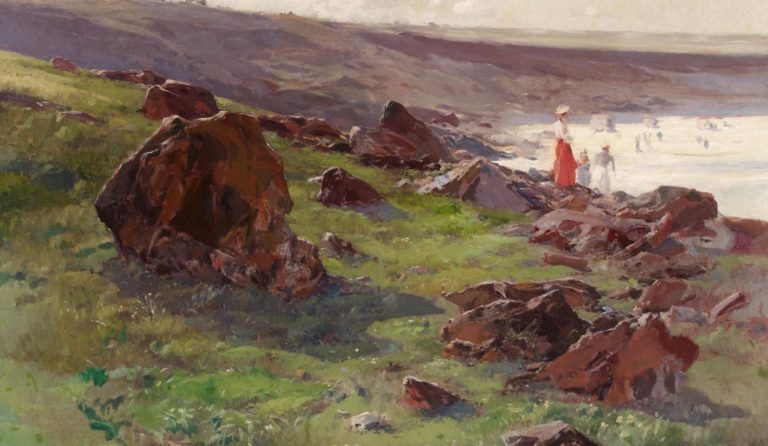
A landscape painter with a passion for maritime scenes, he was a student of Antoni Caba and Martí Alsina, and he spent long periods in several countries, including Paraguay, Argentina, Italy and the United States. As a painter, he sold many works, but due to the commercial failure of the grand exhibition at the Barcelona […]
Read moreClouds
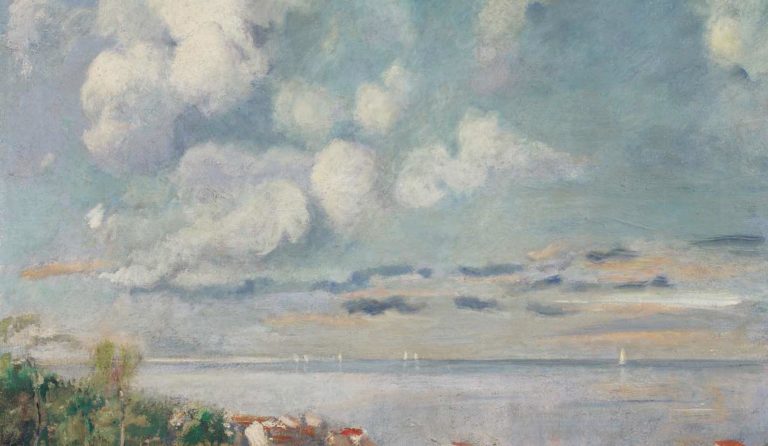
He went to Paris in 1892 and he began to associate with impressionist artists, leading to a change in his pictorial style. His colour pallet became lighter and he began using light blue, ochre and golden tones, starting to accentuate all the colours seen in the sea and rivers. He was continually drawn to the […]
Read moreGypsy woman with Baby

A leading artist in the satirical and humorous press of Paris at the end of the 19th century and early 20th century, he would alternate the themes of Flamenco and “La Espagnolade”, majas and gypsies, with that of the gallant and sheltered woman. Joan Cardona’s folkloric, visual and expressive style -Fauvist in the provocative use […]
Read moreSeascape
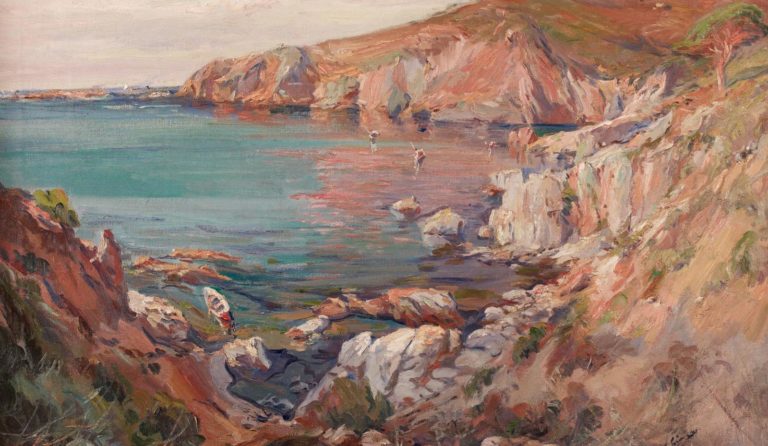
At the age of 57, in 1915, he had his first solo exhibition at the Sala Dalmau in Barcelona. The profits from this exhibition afforded him the financial backing of a group of followers, by way of association and in exchange for works. From then onwards, and until his death, he was able to spend […]
Read morePulvis, cineris, nihil [Dust, ashes, nothing]
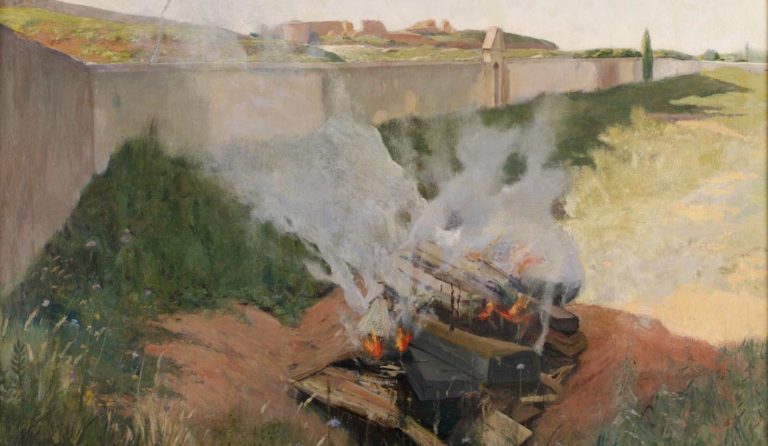
Santiago Rusiñol went to Tarragona in 1894 to visit and keep company with his friend Josep Yxart who was ill at the time. Critic and writer, Yxart had been part of the group of artists and writers of Barcelona’s Cau Ferrat, through Narcís Oller, and who endorsed Rusiñol in the theater and its first premieres. […]
Read moreGreen Landscape
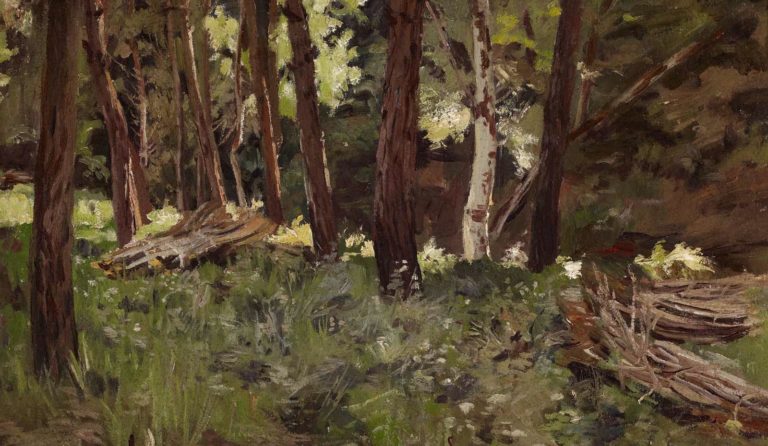
A professional decorative painter, by which he earned his living, his apprenticeship was almost self-taught. He went to Madrid in 1884 to study the Spanish painters of the Golden Age and, thanks to a recommendation from Elisenda Cerdà, daughter of the architect Ildefons Cerdà, he became a student of Carlos de Haes, the Belgian artist, […]
Read moreLes hortènsies de la sabatera [The cobbler’s hydrangeas]
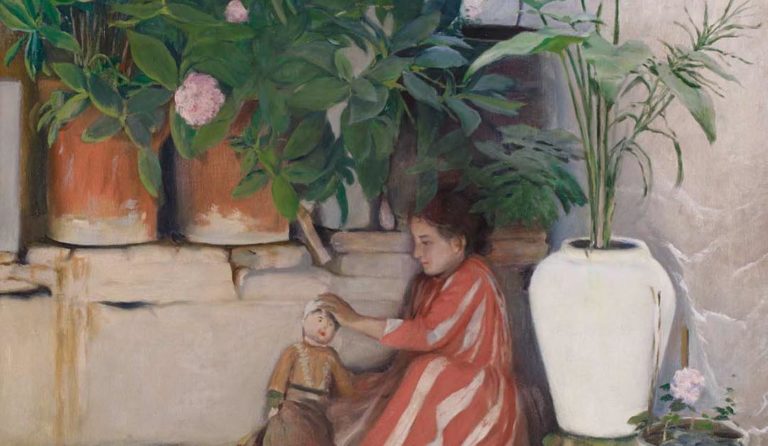
We know Rusiñol’s desire to represent a closed compositional space. In this painting that was presented at a Paris Salon, he paints a corner of a courtyard where he places a girl playing with a doll next to a wall on which there are pots of long-stemmed hydrangeas that cover the entire wall , with […]
Read more