
Clouds
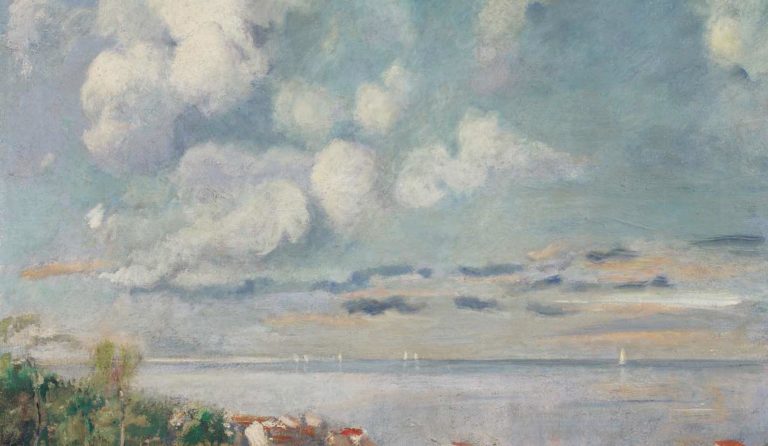
He went to Paris in 1892 and he began to associate with impressionist artists, leading to a change in his pictorial style. His colour pallet became lighter and he began using light blue, ochre and golden tones, starting to accentuate all the colours seen in the sea and rivers. He was continually drawn to the […]
Read moreSeascape
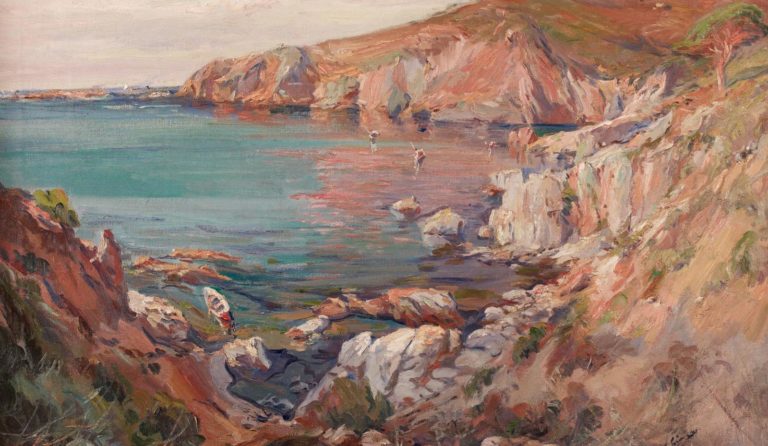
At the age of 57, in 1915, he had his first solo exhibition at the Sala Dalmau in Barcelona. The profits from this exhibition afforded him the financial backing of a group of followers, by way of association and in exchange for works. From then onwards, and until his death, he was able to spend […]
Read moreGreen Landscape
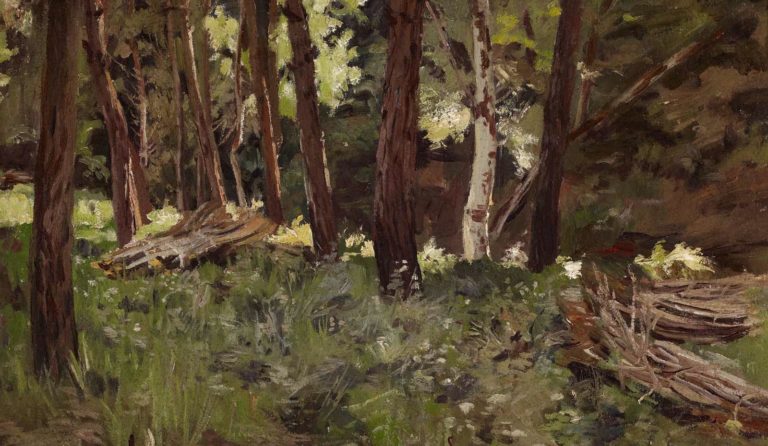
A professional decorative painter, by which he earned his living, his apprenticeship was almost self-taught. He went to Madrid in 1884 to study the Spanish painters of the Golden Age and, thanks to a recommendation from Elisenda Cerdà, daughter of the architect Ildefons Cerdà, he became a student of Carlos de Haes, the Belgian artist, […]
Read moreGypsy woman with Baby
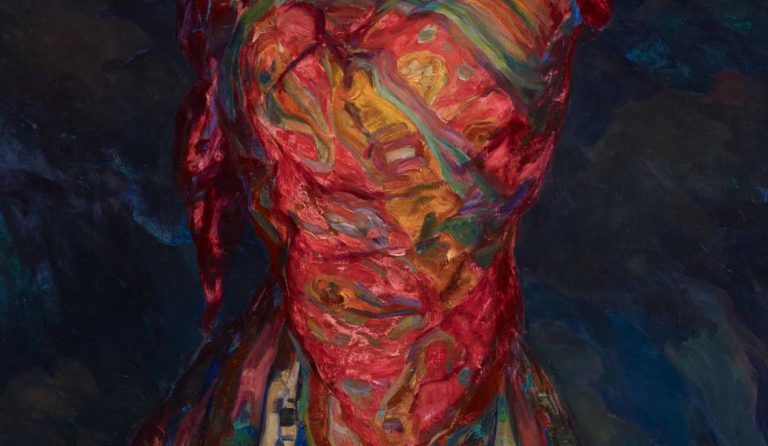
A leading artist in the satirical and humorous press of Paris at the end of the 19th century and early 20th century, he would alternate the themes of Flamenco and “La Espagnolade”, majas and gypsies, with that of the gallant and sheltered woman. Joan Cardona’s folkloric, visual and expressive style -Fauvist in the provocative use […]
Read morePulvis, cineris, nihil [Dust, ashes, nothing]
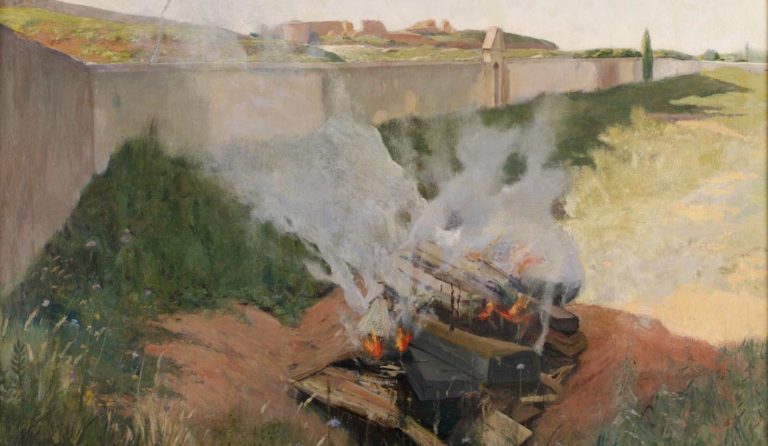
Santiago Rusiñol went to Tarragona in 1894 to visit and keep company with his friend Josep Yxart who was ill at the time. Critic and writer, Yxart had been part of the group of artists and writers of Barcelona’s Cau Ferrat, through Narcís Oller, and who endorsed Rusiñol in the theater and its first premieres. […]
Read moreLes hortènsies de la sabatera [The cobbler’s hydrangeas]
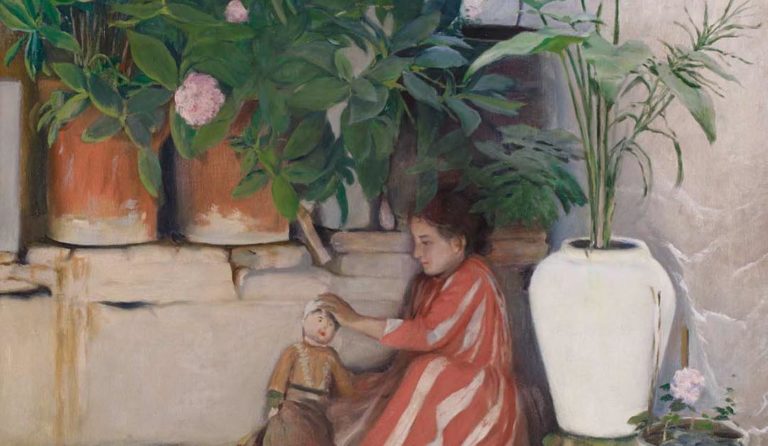
We know Rusiñol’s desire to represent a closed compositional space. In this painting that was presented at a Paris Salon, he paints a corner of a courtyard where he places a girl playing with a doll next to a wall on which there are pots of long-stemmed hydrangeas that cover the entire wall , with […]
Read moreHorse cart. Paris
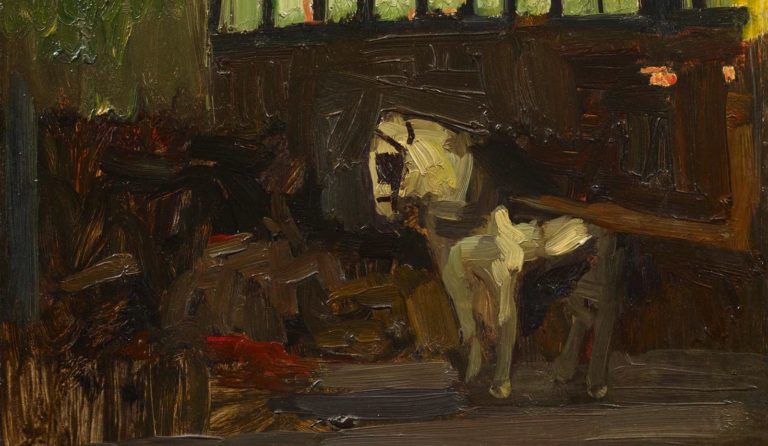
Night scene, centered on a white horse with a cart inside a warehouse in one of the Paris markets. It is an oil sketch that the painter took live from nature and that he later used for larger compositions to present in exhibitions or competitions. A frequent theme in the painting of the first Parisian […]
Read moreForest figure

Influenced by the French naturalist school of the plein-air, inspired by idyllic romantic scenes within realistic elegant compositions, mainly genre scenes that had recently gained popularity. Due to his intellectual pursuits, he formed part of artistic and industrial societies and he was a leading and influential figure for painters and those around him. In 1915, […]
Read moreThe champagne glass

Genre painting with great attention to detail and in the precious style, the brushwork is traditional of gallant classicist painting that we also see in Fragonard and Wateau. We see the theme of modernity in the new protagonists, the inspiration of Paris nightlife and the amusement offered by the urban setting and leisure. The style […]
Read moreFemale figure
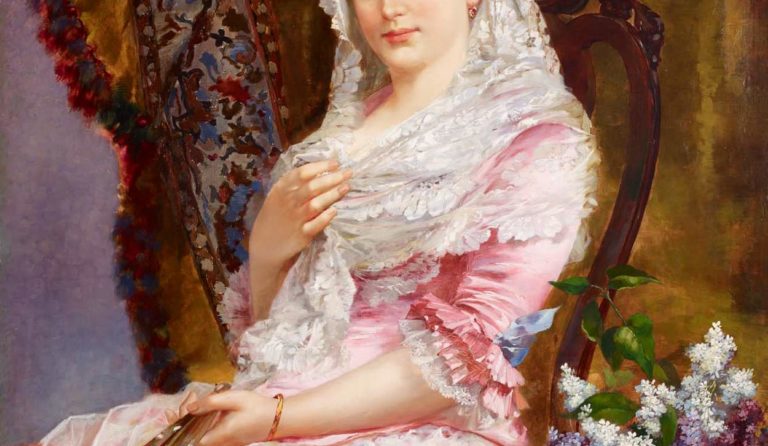
The Masrieras were a family of artists who ran their own goldsmith and jewellery business. They had ties to artistic circles and societies, both in terms of industry and business and culture. They were travellers with an interest in the latest trends. They travelled throughout Europe to the main artistic and cultural events of the […]
Read more